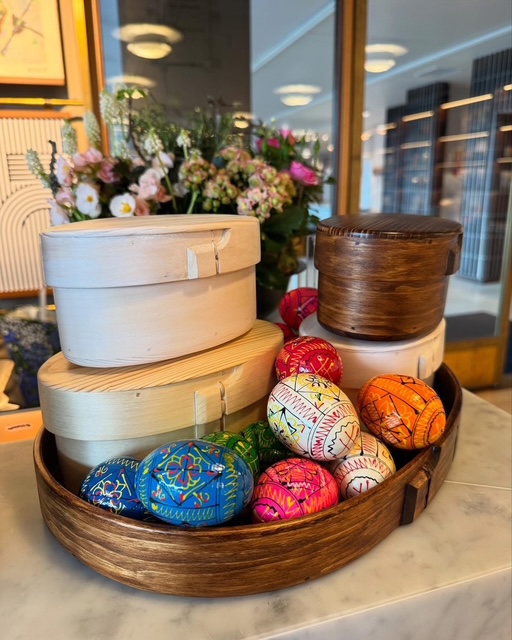
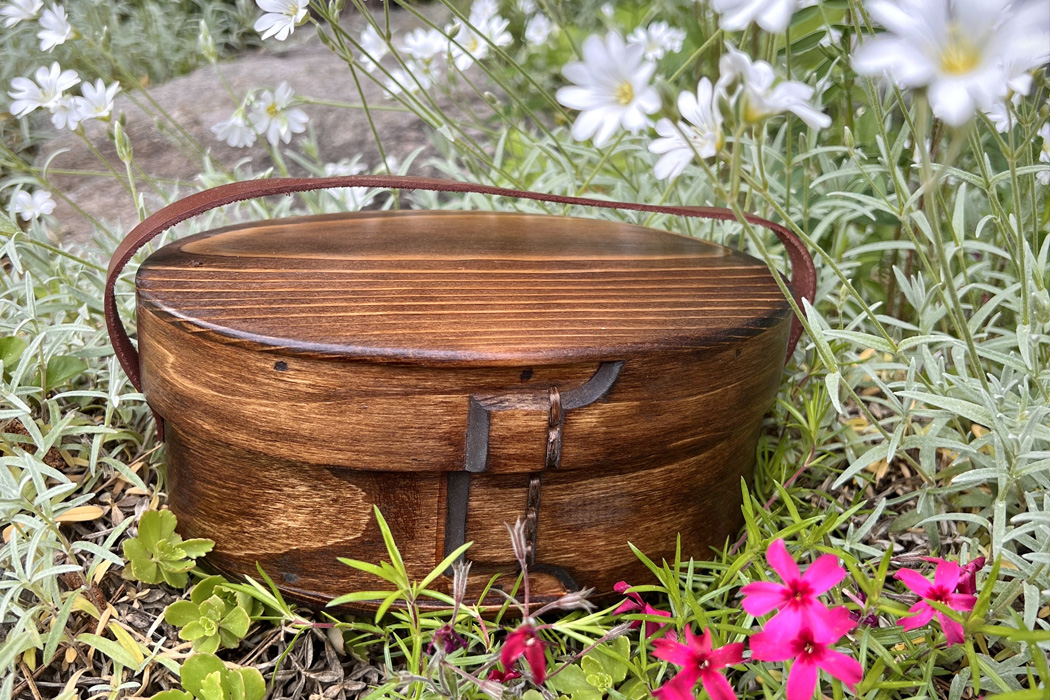
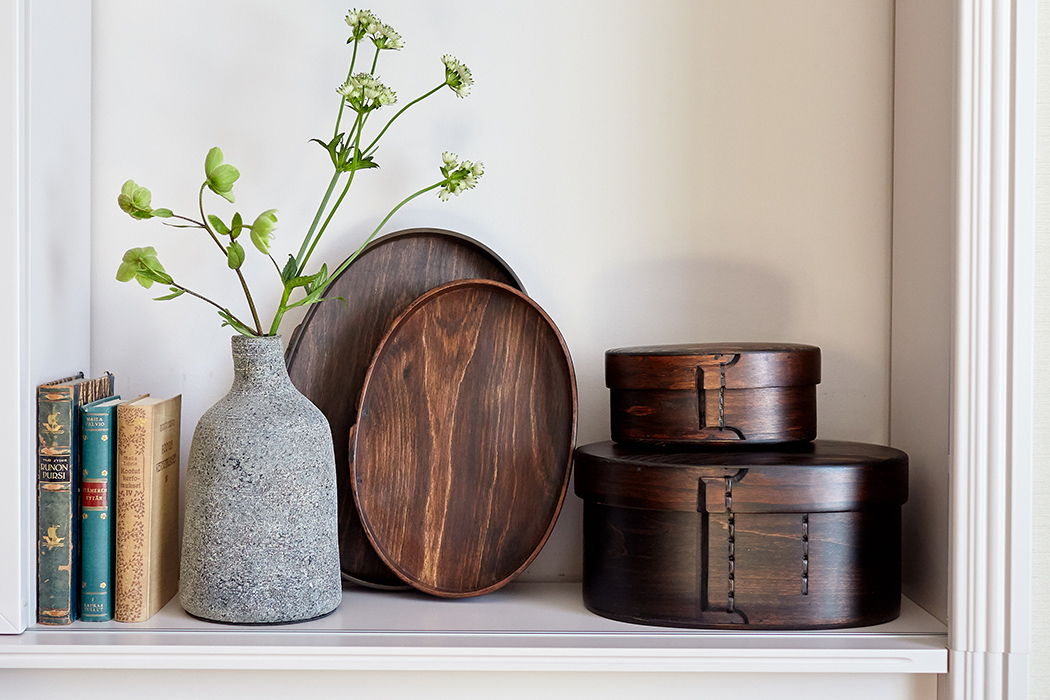
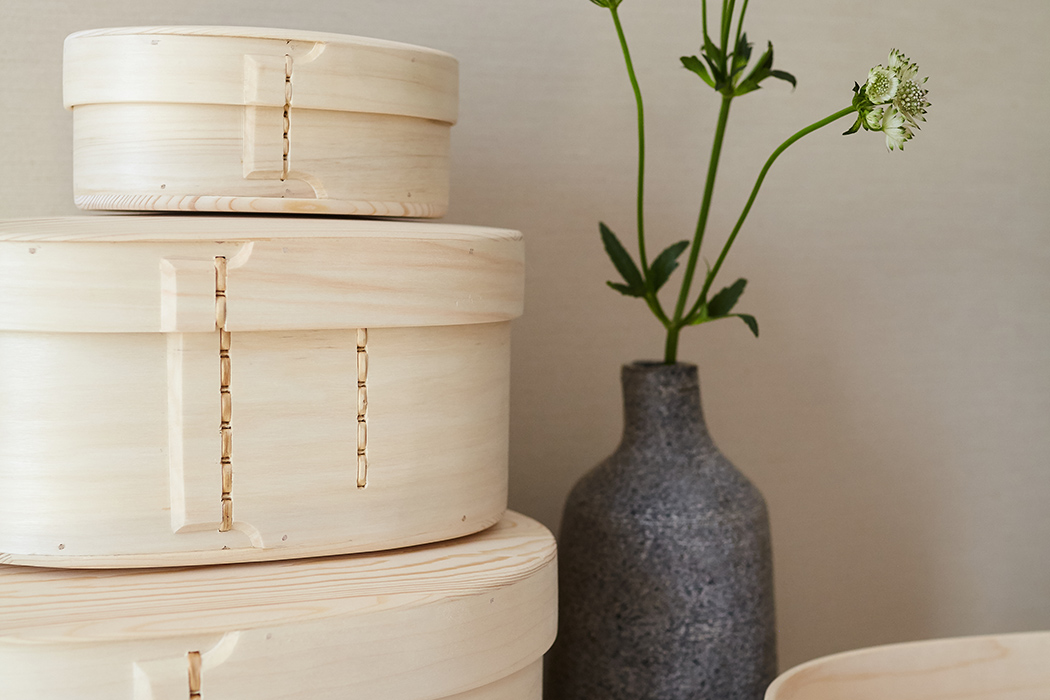
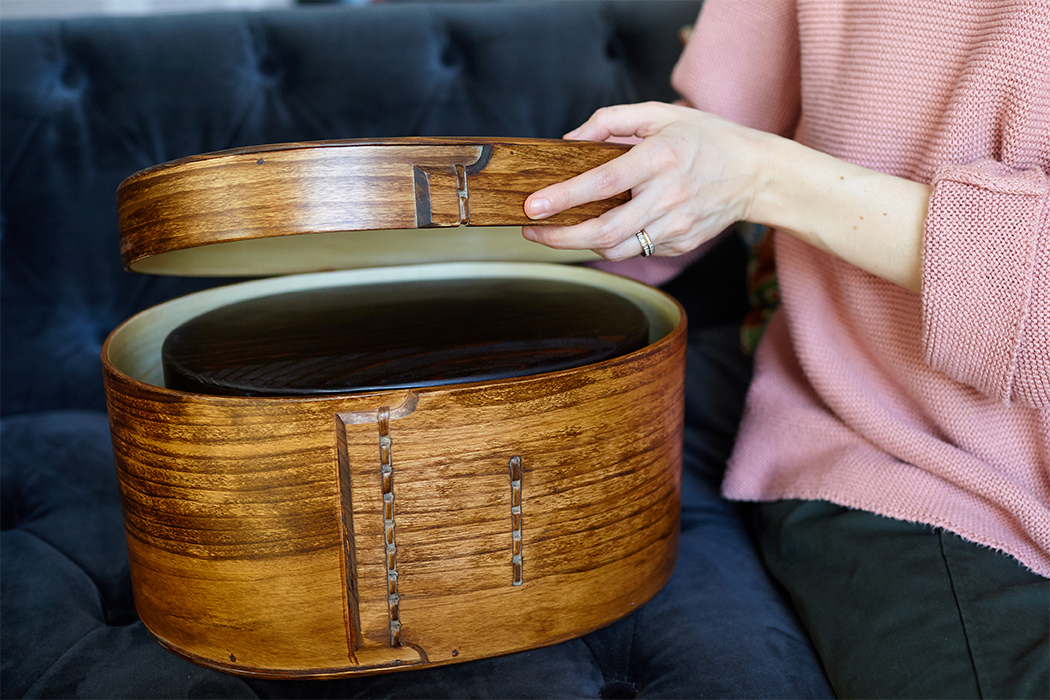
The word “vakka” can mean many things in Finnish, but if you ask around, they’ll commonly agree that a vakka is some sort of a container. The type of vakka Vakkapuoti creates is the most traditional form of a vakka, oval in shape and made with wood.
Its historic roots take us to the times when Finnish people were peasants, living off the land, with no modern comforts. With no other option for containers, as metal was too heavy, glass too expensive and plastic not invented yet, these types of vakkas were used to store grain, food, clothes, anything. Vakka is also associated with our national costume.
See the stories of vakka on this page, and buy one for yourself to be used as a decorative piece, box for jewellery or even a container for your knitting to keep the yarn untangled.
In middle Finland, vakkas were commonly made from aspen, while in the west, they use pine and birch and in Lapland mainly only birch.
The process of making vakkas starts when a tree is cut in the spring time. There are multiple stages of drying, one of which requires the heat from a heater in the winter.
All the material used in a vakka are natural. The braid is made from the roots of a pine tree, and nails are aspen nails cut with a Finnish knife called puukko.
Vakkapuoti is located in the town of Toivakka. As you may notice the town has the word vakka in it and according to legend, the name comes from villagers pointing out to “that vakka” = ” toi vakka”, when going to church by boat and changing to church clothes held in vakkas for the ride.
Vakkas have developed differently in different areas of Finland. The differences are slight, such as how the braid is done or how the wood is cut for decoration. Vakkapuoti follows design used in Central Finland, based on historical details Pertti Humalajärvi has discovered.